
March 16, 2026, Yerevan
The threat of external interference in the elections is real and can manifest in the organized involvement of foreign voters.
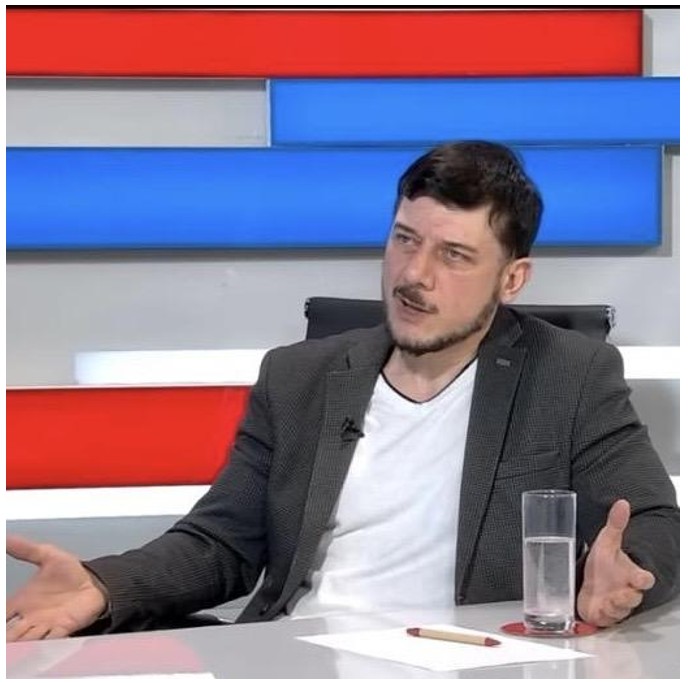
FactorTV spoke with Hovsep Khurshudyan, President of the “Free Citizen” NGO. During the conversation, Armenia’s domestic political reforms and changes in the foreign policy vector are discussed. The author criticizes the government’s personnel policy in the Constitutional Court, emphasizing the dangers of the lack of systematic vetting in the judicial system. The text focuses on the topic of Armenia’s rapprochement with the European Union, where broad public support is seen as a guarantee of the country’s democratization and security. At the same time, a warning is sounded about possible electoral sabotage planned by Russia and attempts to undermine internal stability through pro-Russian/fifth column forces.
Hovsep Khurshudyan noted that in the case of Hrayr Tovmasyan, criticisms were previously voiced regarding his party ties, and, in his opinion, the candidacy of Vladimir Vardanyan, who has now been nominated with the same logic, also raises problems. He said that the Constitutional Court should be an independent body, where no persons are dependent on party influence, and that such appointments can harm the court’s legitimacy. Khurshudyan believes that Vardanyan previously had a negative position on the idea of vetting the judiciary. According to him, vetting should include not only a property check but also an assessment of good conduct, including a review of previously rendered judicial decisions. He emphasized that without such a mechanism, judges who have previously made questionable decisions continue to hold office.
Vetting should have been extended not only to judges, but also to investigators and prosecutors. According to his observation, the system retained individuals who were previously involved in politically motivated cases because vetting was not carried out.
Khurshudyan questioned why the government seeks to appoint its own teammates to state bodies, noting that this should be limited. He expressed the opinion that it is possible to select other, more neutral and unaffiliated personnel.
He also touched upon the amendments to the Constitution, noting that the majority of political forces are interested in preserving the “super-prime minister” system. Khurshudyan observes that the problem is not the nature of the system, but who holds the power. At the same time, he admitted that this system has provided a certain stability during the transition period.
Speaking about constitutional developments, he noted that the constitutional models adopted during the reigns of Robert Kocharyan, Serzh Sargsyan, and Levon Ter-Petrosyan have at different stages “acted against their creators,” showing that the constitution is an independent institution with its own counterweights.
Referring to the Declaration of Independence, Khurshudyan noted that it would be more correct not to remove its reference from the new Constitution, but to clarify that only those provisions that do not contradict the Constitution are valid. According to him, this approach would allow preserving the symbolic significance of the declaration while neutralizing legal contradictions.
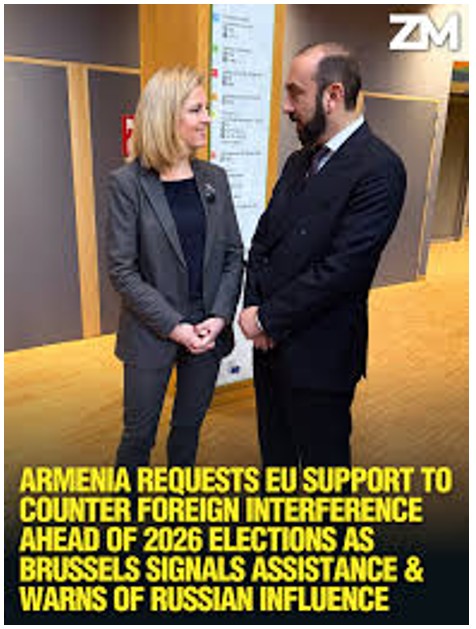
On foreign policy issues, Khurshudyan noted that the pro-Russian stance of some opposition figures is obvious. He noted that the statements of Robert Kocharyan and Samvel Karapetyan indicate this direction. According to him, the statements of intelligence agencies simply record already known realities. The threat of external interference in the elections is real and can manifest in the organized involvement of foreign voters. He noted that he had published this information earlier and that it is now more systematic. At the same time, he emphasized that proving such processes is difficult, especially when the information comes from people operating in an atmosphere of fear.
Regarding electoral processes, he noted that the scale of possible involvement may also be limited by technical factors, including access, transportation, and organizational constraints.
Speaking about the political discourse, Khurshudyan noted that a significant part of the public supports the European direction. According to his assessment, about 70% of citizens have a positive attitude towards integration into the European Union. He emphasized that this direction should become an important part of the political agenda.
Khurshudyan also noted that the authorities were initially skeptical of European integration initiatives but later, upon seeing public support, began promoting this idea more actively. According to him, even cautious voters may accept the idea of applying for membership if it is presented as a long-term process.
In summary, Hovsep Khurshudyan believes that the upcoming elections may be decisive for the direction of Armenia’s development, especially in terms of European integration, and that political forces should present clear programs in this regard.
https://www.youtube.com/watch?v=m8Uxlt3wK90